
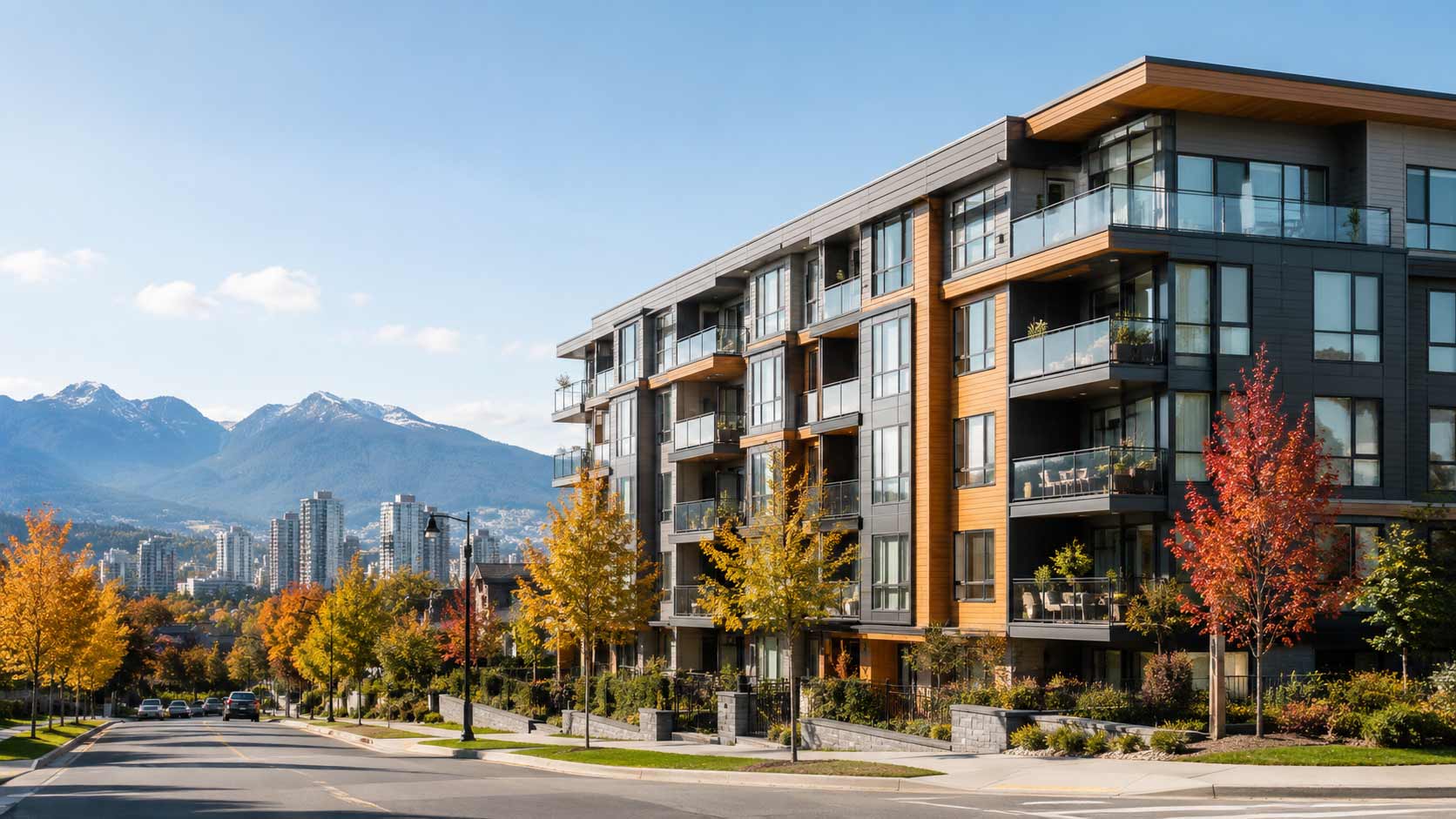
Something fundamental is changing in Canada. For generations, homeownership was not just a financial goal – it was a cultural identity. The detached house with a driveway was the Canadian dream, as real and aspirational as the American version.
That dream is ending. Not with a crash, but with a quiet, structural retreat.
Between Canada’s 2011 and 2021 census, the national homeownership rate fell from 69% to 66.5% – its first sustained decline in modern history. Among 25 to 29 year-olds, ownership collapsed from 44.1% to 36.5% in a single decade. And the trend has only accelerated since. By the end of 2025, the rate had slipped further to approximately 66%, with projections pointing downward for the rest of the decade.
This is not a cyclical correction. It is a demographic, economic, and cultural transformation, driven by forces that do not reverse. Understanding it is not merely academic. For investors who can read the structural shift early, it represents one of the most durable, low-risk opportunities in North American real estate.
Key Statistics
| Statistic | What It Means | Source |
| 66% | National homeownership rate, 2025 – down from 69% in 2011 | Statistics Canada / IBISWorld 2025 |
| 36.5% | Canadians aged 25 to 29 who own a home – down from 44.1% in 2011 | Statistics Canada Census 2021 |
| 2.6x | Renter households grew 2.6x faster than owner households from 2011 to 2021 | Statistics Canada |
| 54% | Gross income needed for mortgage costs in 2024 – up from 39% in 2019 | CMHC 2025 |
Part One: The Four Forces Nobody Can Reverse
Canada’s shift from an ownership to a rental society is not the product of one cause. It is the compounding result of four structural forces that have built over decades and that now reinforce each other in ways that make the trend essentially irreversible.
1. The Price Wall
The average Canadian home now costs $661,100 nationally, with British Columbia at $946,100 and Ontario at $859,600. CMHC’s affordability ratio hit 54% in 2024, meaning the average household must spend over half its gross income on mortgage payments. The Royal Bank of Canada forecasts that more than half of the 1.9 million new Canadian households forming by 2030 will be unable to afford homeownership. That is not a forecast of difficulty. That is a forecast of structural exclusion.
2. The Mortgage Stress Test
Canada’s federal mortgage stress test, requiring buyers to qualify at rates 2% above their contracted rate, has functionally locked out millions of working households who could comfortably service a mortgage but cannot pass the qualifying threshold. Among those who will be unable to buy by 2030, 40% are expected to fall short of rental thresholds too. This is a generation simultaneously shut out of both the ownership and comfortable rental markets. The stress test is not going away. It is a feature of responsible lending, not a bug.
3. The Immigration Multiplier
Canada admitted more than one million new residents in 2022 to 2023 alone – nearly five times the number of homes completed. Every newcomer to Canada enters the rental market first. Even as immigration policy tightened in 2024 and 2025, reducing the pace of arrivals, the underlying structural reality remains: Canada’s population is growing at a rate its housing supply cannot match, and the first stop for all of that growth is rental housing. CMHC estimates 200,000+ rental units have been funded through federal programs since 2017, and the pipeline is still not enough.
4. The Generational Reset
For millennials and Gen Z, the relationship with homeownership has fundamentally changed. 70% of Canadians now agree that owning a home has become impossible. Among Gen Z, 73% are worried they will never save enough for a down payment. In British Columbia, that down payment requires an average of 13 years of savings at median income – 23 years in Metro Vancouver. A generation is not delaying ownership. It is accepting that renting is their permanent reality and designing their lives around it. This is a cultural shift as much as an economic one.
Homeownership Rate by Generation – Canada, 2025
Source: Statistics Canada / Wahi Research 2025. Among 25 to 29 year-olds specifically: 44.1% ownership in 2011 to 36.5% in 2021, with accelerating decline since. Source: Statistics Canada Census 2021.
| Generation | Homeownership Rate |
| Baby Boomers (60+) | 81% |
| Gen X (44 to 59) | 74% |
| Millennials (28 to 43) | 61% |
| Gen Z (18 to 27) | 21% |
Part Two: The Supply Crisis: Building for Yesterday
For decades, Canadian housing policy was built around the assumption that people want to own. Zoning favoured single-family detached homes. Tax policy incentivised condo investment over purpose-built rental. Financing structures made ownership more attractive. The result is a chronic, structural undersupply of purpose-built rental housing, precisely the category of housing that a growing renter nation needs most.
Canada currently needs 3.5 million additional homes by 2030 to restore affordability, according to CMHC. Current construction pace is less than half what is required. And of what is being built, a disproportionate share is condos – not purpose-built rental – meaning the new supply is priced for investment buyers, not renters.
The pivot is happening, but slowly. Purpose-built rental construction increased more than 25% in the first half of 2025. CMHC’s Apartment Construction Loan Program was allocated an additional $15 billion in 2025, for a total of $55 billion. BC Bills 44 and 47 mandate increased density near transit corridors. Federal policy is finally aligned with the rental reality. But the gap between what is needed and what exists remains enormous, and it will persist for at least a decade.
| Statistic | What It Means | Source |
| 3.5M | Homes needed in Canada by 2030 | CMHC 2025 Housing Supply Report |
| +25% | Purpose-built rental construction increase in H1 2025 | Informa Connect / CMHC 2025 |
| 88% | New rental starts backed by CMHC in 2024 | CMHC 2025 |
| $55B | CMHC Apartment Construction Loan Program total | Federal Budget 2025 |
The vacancy rate story is instructive. After hitting crisis lows below 2% in major cities in 2022 and 2023, Canada’s purpose-built rental vacancy rate rose to 3.1% in 2025 – slightly above the 10-year average of 3.0%. This has been reported as a “cooling” of the rental market. But read carefully: average rents for occupied 2-bedroom units still rose 5.1% in 2025, driven by higher repricing at turnover. The market is not softening for renters. It is slightly less catastrophic than it was at its worst. Purpose-built rental operators are offering incentives like a month of free rent, not because there is excess supply, but because new higher-priced buildings are competing for the same pool of renters who cannot afford them.
The structural undersupply is most acute in transit-connected, mid-market locations – precisely the segment where purpose-built rental development has the strongest investment case. Cities like Maple Ridge, where population grew 11.9% since 2021, where average rents remain 26% below Vancouver, and where direct commuter rail connects residents to the city core, represent the intersection of affordability, demand, and growth that defines the strongest rental investment geography in Canada.
Part Three: British Columbia: Ground Zero of the Rental Shift
If Canada is becoming a rental nation, British Columbia is already there. The province has the highest unaffordability perception in Canada: 83% of BC millennials say homes in their region are unaffordable. Average rents in Metro Vancouver remain among the highest in North America – $2,303/month for a two-bedroom – even as the affordability crisis has pushed enormous demand pressure into secondary markets along major transit corridors.
The BC government responded with one of the most significant zoning reforms in provincial history. Bill 44 requires municipalities to allow higher density near transit hubs. Bill 47 extends those provisions to major transit corridors. The result is a wave of purpose-built rental development that would have been impossible under the previous zoning regime is now not just permitted, but actively encouraged and fast-tracked.
Years to Save a 20% Down Payment – BC
Estimated at median household income, 2025.
| Location | Estimated Years |
| Metro Vancouver | 23 years |
| BC Average | 13 years |
| Maple Ridge | 9 years |
| Other Provinces | 4 to 6 years |
Average Monthly Rent – 2-Bedroom
Source: CMHC Rental Market Report 2025. Maple Ridge is 26% below Vancouver with a direct 67-minute commuter rail connection.
| Market | Average Monthly Rent |
| Vancouver | $2,303 |
| Toronto | $2,106 |
| Calgary | $1,921 |
| Maple Ridge | $1,707 |
The most compelling rental investment locations in BC today share three characteristics: they sit on transit corridors connecting to Vancouver, they offer rents 20 to 30% below the metro core, and they are absorbing significant population overflow from Vancouver’s housing crisis. Maple Ridge, directly opposite Port Haney Station on the West Coast Express, with 11.9% population growth since 2021 and a $16.6 million Federal Housing Accelerator Fund allocation, is the archetype of this geography.
Part Four: The Investment Case for Purpose-Built Rental
For investors, the structural rental shift creates a specific and durable investment thesis: purpose-built rental in transit-connected, mid-market Canadian cities will generate stable, inflation-linked income over long hold periods, with meaningful capital appreciation at exit driven by compressed cap rates on stabilised NOI.
This is not a speculative bet on continued rent inflation. It is a position backed by demographic certainty: a growing renter class, chronic undersupply of quality rental stock, government policy explicitly aligned with purpose-built rental, and a cohort of institutional capital, including pension funds, REITs, and foreign investors, that is actively shifting away from condos and into purpose-built rental. That means cap rate compression is already in motion.
Investment Perspective: Why Now? The Timing Argument The best time to invest in purpose-built rental is before the vacancy rate normalises, before cap rates compress, and before institutional capital fully prices in the structural shift. In Canada’s mid-market transit corridors, that window is still open, but narrowing rapidly. Purpose-built rental construction increased 25% in H1 2025. CMHC’s $55 billion financing program is accelerating projects that would have taken years to get off the ground without government support. BC’s zoning reforms have opened up densities that did not exist 18 months ago. Projects that acquire land today, design for the reformed zoning environment, and are CMHC MLI Select eligible will enter a market in 2028 to 2030 where vacancy is structurally constrained, rents have inflated 2.5% annually, and the institutional buyer pool for stabilised rental assets has expanded dramatically. The investors who benefit most from structural shifts are those who enter before the shift is priced into every asset. Canada’s rental revolution is still early enough that entry points exist, but the window of opportunity at pre-compression pricing is closing as each year of development activity brings more institutional capital into the space. |
The CMHC MLI Select program, which provides 50-year amortization at below-market rates for qualifying purpose-built rental developments, fundamentally changes the financing economics of this asset class. A developer who can access MLI Select financing on a project like Portal, approximately 160 units, transit-adjacent, and energy-efficient, gains a cost-of-capital advantage that is unavailable to any other real estate category. This government backstop is not incidental to the investment thesis. It is central to it.
Conclusion: The Canadian Dream Didn’t Die. It Evolved.
The story of Canada’s rental shift is ultimately not a story of failure. It is a story of adaptation. A generation that cannot buy is not a generation without aspiration. It is a generation that has recalibrated what aspiration looks like. Quality rental housing, in a community they love, near transit that connects them to opportunity, at a price they can actually afford: this is the new Canadian dream for millions of people.
For investors who understand what is happening, this evolution is not a problem to lament. It is a structural demand signal of extraordinary clarity and durability. The renter class is growing, permanent, and underserved by quality supply. Government policy is actively financing the construction of that supply. Cap rates on stabilised purpose-built rental assets are compressing as institutional capital arrives. The entry window for investors who want to participate at pre-compression economics is still open, but not indefinitely.
Canada is not becoming a nation of renters overnight. But it is becoming one. And the investors positioned on the right side of that shift, with the right assets, in the right locations, backed by the right financing, will capture returns that the previous generation of Canadian real estate investors could only have imagined were available from ownership.
The Canadian dream is evolving. The investment opportunity is real. And the window is now.